
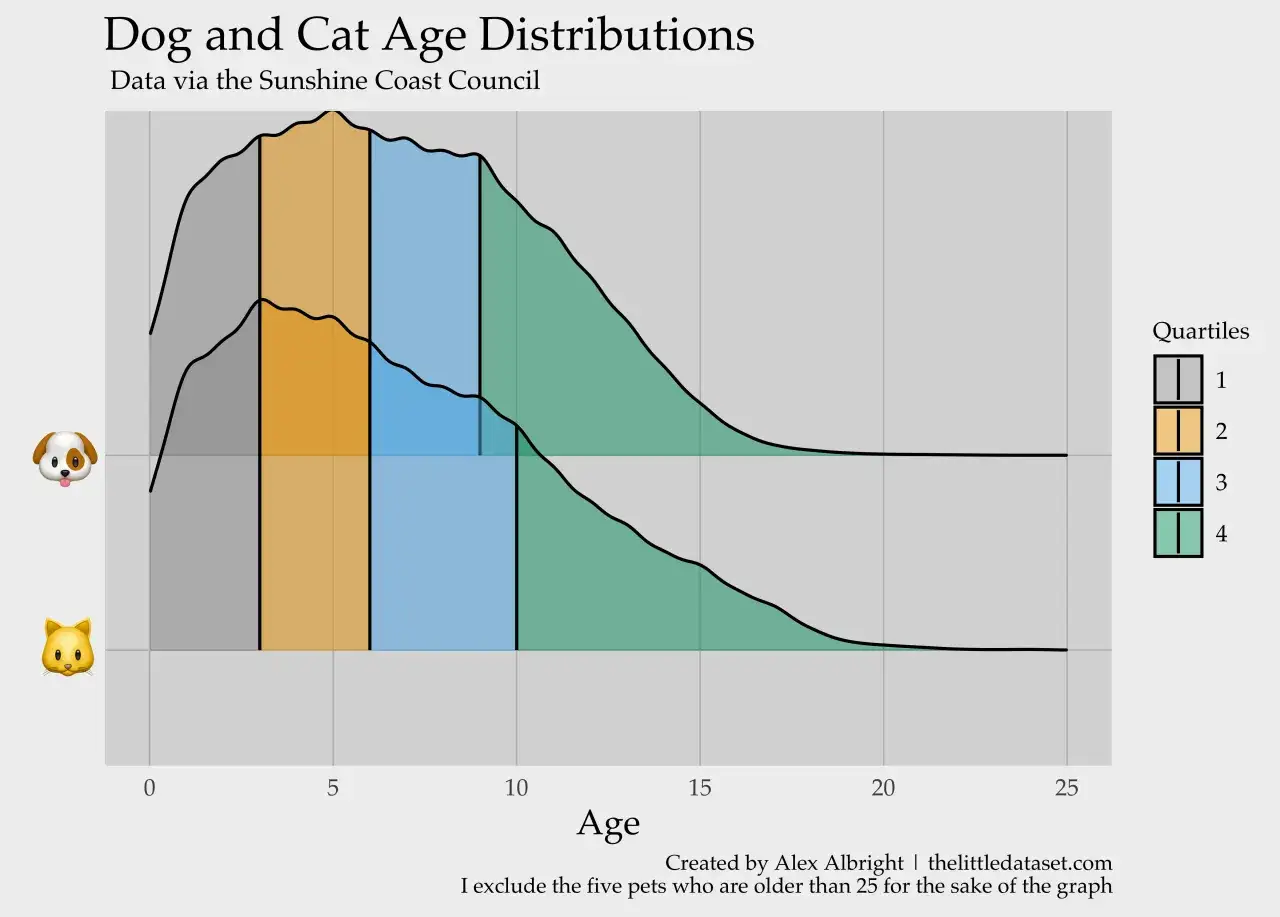
Do cats live longer than dogs? Usually, cats have the edge in everyday pet-care conversations, but the reality is messier than a simple yes-or-no answer. In one large US veterinary dataset, dogs averaged 12.69 years and cats 11.18 years, while many broad care guides still place cats in the 13-17 year range and dogs in the 10-13 year range. I focus on the practical side of that gap, because size, breed, indoor safety, weight, and preventive care matter more than species alone.
The real answer depends more on size and care than on the species label
- Cats often live longer than dogs in broad pet-care estimates, but not in every dataset.
- Small dogs can match or exceed the lifespan of many cats.
- Giant dogs usually live the shortest lives, often far below feline averages.
- Indoor living, lean body condition, and routine vet care make the biggest difference for both species.
- Dog behavior matters because training, exercise, and safe handling reduce risk over time.
The numbers are closer than people think
When I compare cats and dogs, I start with the ranges people actually see at home, not just the headline averages. Healthy indoor cats commonly reach their mid-to-late teens, while many small dogs live just as long and giant dogs often age out much earlier. The most useful way to read the question is this: species matters, but body size, breed, and lifestyle usually matter more.
| Group | Typical lifespan | What it means in practice |
|---|---|---|
| Indoor cat | About 13-17 years, often longer with good care | Usually a strong longevity profile if the cat stays safe, lean, and medically monitored |
| Outdoor or unsupervised cat | Can drop to just a few years | Traffic, fights, toxins, parasites, and lost-pet risk can overwhelm the species advantage |
| Small dog | About 10-15 years, with many reaching the mid-teens | Can live as long as or longer than many cats |
| Large dog | About 8-12 years | Size-related strain and breed-linked disease start to matter more |
| Giant dog | About 6-10 years | Usually the shortest-lived companion dogs, even with excellent care |
That spread is why I do not treat lifespan as a species stereotype. It is a population pattern, not a promise for any one pet. Once you see the ranges, the next question is why cats often do better in the first place.
Why cats often have the longevity edge
Cats usually benefit from a combination of biology and risk exposure. They are smaller, they do not come in the extreme size range that pushes giant dogs toward shorter lives, and many of them live indoors where they avoid cars, fights, and many infectious hazards. Recent evolutionary research also suggests that larger brains and a stronger investment in immune-related genes may be linked to longer mammalian lifespans, which may help explain part of the cat-versus-dog pattern.
- Indoor living lowers danger. A cat that stays inside avoids many of the injuries and infections that cut life short.
- Smaller bodies tend to age more slowly than very large ones in companion animals.
- Breed extremes matter. Cats are generally less affected by the kind of giant-body size shift that shortens many dogs’ lives.
- Prevention still counts. Spaying, neutering, weight control, and regular exams all change the odds in the cat’s favor.
My take is simple: cats often have a structural advantage, but that advantage can disappear fast when they live outdoors or carry too much weight. That is where dogs start to catch up, and sometimes pass them.
Why some dogs outlive cats
The biggest reason is size. Small dogs are a different story from large or giant dogs, and they can live into the mid-teens or beyond with solid care. A Chihuahua, Pomeranian, or similar toy breed may outlive many cats, while a Great Dane or Mastiff will usually not. Dog shape matters too: long-nosed breeds often do better than flat-faced breeds because they are less likely to deal with chronic breathing trouble and heat stress.
- Small dogs have the best canine odds. Their lifespan can overlap with indoor cats almost completely.
- Breed health risks change the picture. Some breeds carry heart, joint, respiratory, or neurological issues that shorten life.
- Weight management is a major lever. Lean dogs often do better in later life than dogs that drift overweight early.
- Training affects safety. A dog with good recall, leash manners, and handling tolerance is less likely to get hurt or miss care.
This is where dog care and behavior stop being separate topics. A well-trained dog is easier to exercise, easier to examine, easier to groom, and easier to keep safe around roads, other animals, and visitors. Over a 10- to 15-year span, that adds up.
The care habits that actually move the needle
When I look at lifespan, I do not start with supplements or trendier claims. I start with the boring things that repeatedly show up in veterinary data: body condition, preventive medicine, and routine follow-through. BCS, or body condition score, is the vet’s quick way of judging whether a pet is underweight, ideal, or overweight, and it matters more than many owners realize.- Keep pets lean. In one Banfield analysis, obese dogs lived 11.71 years on average versus 13.18 years for dogs at ideal condition; obese cats also trailed cats with better body condition, at 12.56 years versus 13.67 years.
- Use measured portions. Free-feeding and oversized treats are two of the fastest ways to add silent risk.
- Stay current on preventive care. Vaccines, parasite control, and annual exams help catch problems before they become long-term damage.
- Protect dental health. Dental disease is common, painful, and easy to ignore until it is advanced.
- Fit the diet to the life stage. Puppies, adult dogs, seniors, kittens, adults, and older cats do not need the same calories or nutrient balance.
- Do not wait for obvious illness. Behavioral shifts, appetite changes, and reduced activity often show up before a diagnosis.
If I had to pick one controllable factor that deserves more attention than it gets, it would be weight. A pet that stays lean tends to move better, breathe easier, and tolerate aging with fewer setbacks. That becomes even more important for dogs, where day-to-day behavior can either protect health or quietly erode it.
The dog habits that protect years, not just manners
I do not separate behavior from health in dogs. Reliable recall, calm leash manners, and comfortable handling are not just “good manners”; they lower the odds of injury, escape, and inconsistent exercise. They also make grooming, exams, nail trims, ear checks, and medication much easier, which matters more as a dog gets older.
- Teach leash skills early. Pulling increases the chance of overuse injuries and makes exercise less consistent.
- Build a dependable recall. A dog that returns when called is less likely to run into traffic, wildlife, or other dogs.
- Match exercise to the body. A young, athletic dog may need much more activity than a senior or a brachycephalic breed can safely tolerate.
- Use enrichment instead of extra food. Puzzle feeders, scent games, and short training sessions reduce boredom without adding calories.
- Address anxiety early. Chronic stress can make routines harder to keep and can hide or worsen health issues.
- Train for handling. A dog that tolerates paws, ears, mouth checks, and vet handling is easier to monitor as it ages.
In practice, behavior is a health tool. The calmer and more cooperative the dog, the easier it is to keep up with the habits that protect lifespan: movement, weight control, preventive care, and early detection of change. That is one reason I tell dog owners to think about training as part of longevity, not a separate nice-to-have.
What the comparison means if you're choosing between a cat and a dog
If lifespan is part of your decision, I would not choose by species alone. I would choose by the lifestyle you can support every day. An indoor cat with stable weight and regular care can be an excellent long-lived companion; so can a small, healthy dog whose behavior is well managed and whose medical care stays on schedule.
My practical rule is this: pick the pet whose risks you can control well. For cats, that usually means indoor safety, parasite prevention, and weight control. For dogs, it usually means the right breed size, solid training, enough exercise, and a clear plan for preventive vet care. If you build those habits early, you give either species a far better shot at a long, comfortable life.