Beets can be a useful occasional treat for dogs, but only when the right part of the vegetable is served the right way. When people ask can dogs eat beets, the short answer is yes, but the real answer depends on preparation, portion size, and your dog's health history. In this article I break down the safety basics, the real nutrition upside, the common mistakes with raw or pickled beets, and the portion sizes that actually make sense.
What matters most before you share beets with your dog
- Plain beet root is generally safe for most healthy dogs in small amounts.
- Cooked and unseasoned is the easiest, most digestible way to serve it.
- Pickled beets, beet juice, and seasoned canned beets are poor choices.
- Dogs with oxalate stones or urinary issues should be more cautious.
- Temporary pink or red urine or stool can happen after eating beets.
- Beets should stay a treat, not a daily dietary staple.
Can dogs eat beets safely?
Yes, most healthy dogs can eat plain beets in moderation. The ASPCA lists beets as non-toxic to dogs, which is a good starting point, but non-toxic does not mean unlimited. I think of beet root as a small topper or occasional treat, not something to build a meal around. That distinction matters because the way you serve beets has more impact than the vegetable itself.
The real question is not whether beets are poisonous. It is whether they fit your dog's body, your dog's diet, and the way you prepare them. That is where the practical details start to matter.
What beets actually add to a dog's diet
Beets bring fiber and a few useful nutrients, including vitamin C, folate, potassium, magnesium, and iron. In a commercial dog food, beet pulp is often used as a fiber source; in a home setting, the practical benefit is much smaller because the serving should be tiny. I like beets as a low-drama garnish for dogs that tolerate vegetables well, but I do not oversell them as a superfood. A spoonful of beet mash may support digestion a bit, yet it will not compensate for a poor diet.
That said, I do understand why owners like the idea of adding vegetables to a dog's bowl. Beets are colorful, easy to find, and generally simple to prepare. The catch is that the same traits that make them appealing also create a few real drawbacks.
When beets are the wrong choice
The biggest red flag is oxalic acid. Dogs with a history of calcium oxalate crystals, bladder stones, or kidney stones may need to skip beets completely, because the oxalates can add to the problem. I am also cautious with dogs that are overweight, prone to pancreatitis, or sensitive to rich treats, since beets still bring natural sugar and carbohydrates. If your dog gets gas, loose stool, or vomiting after fibrous vegetables, that is a signal to stop treating beets like a harmless snack.
Beets can also tint urine and stool pink or red, which is usually harmless for a short time, but persistent discoloration, straining to pee, or pain is not something I would brush off. Those signs deserve a vet call.
Read Also: Can Dogs Eat Pancakes? The Truth About Safe Treats
When I would stop and call the vet
- Your dog has known urinary stones or chronic kidney disease.
- Your dog is on a prescription diet and should not have extras.
- Vomiting, diarrhea, or abdominal pain follows the treat.
- Red urine or stool lasts more than a day or comes with straining.
If the risk profile looks fine, the next issue is preparation. That is where a safe treat can become a messy mistake if you are not careful.
How to serve beets without creating problems
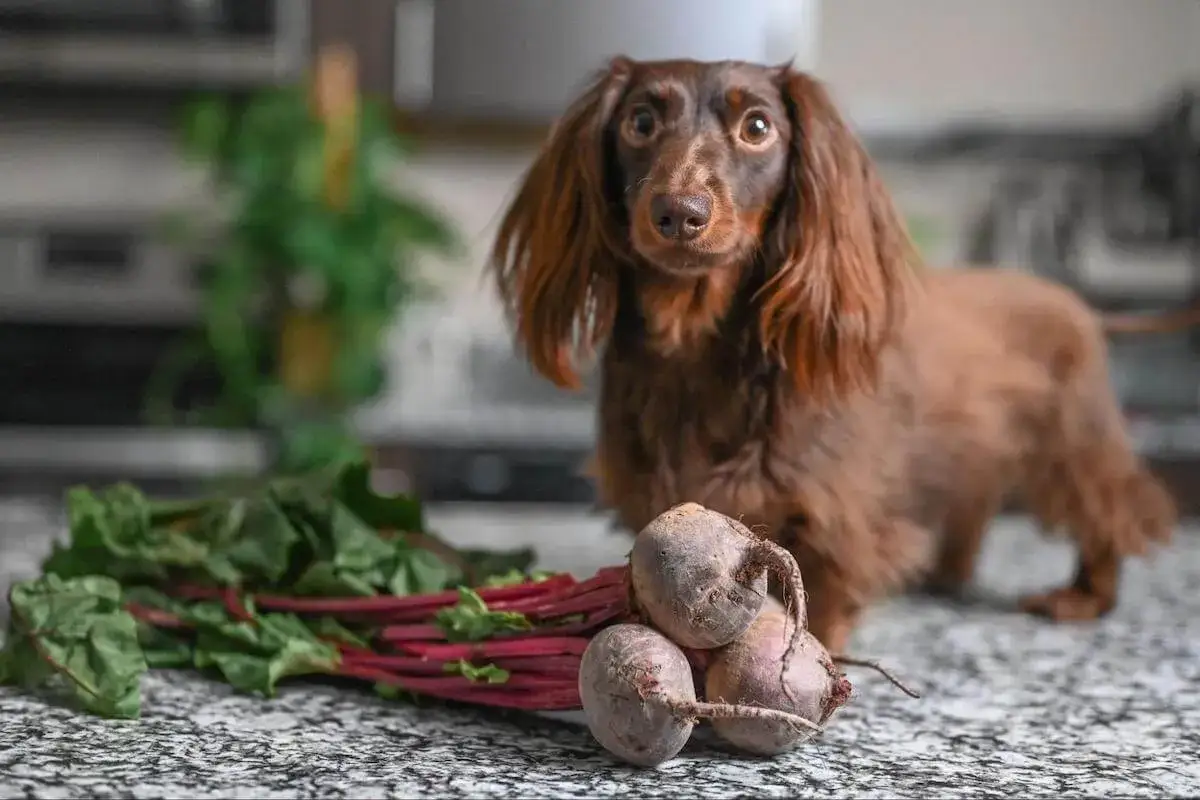
I prefer cooked, plain beet root that has been scrubbed well, peeled, and cut into small pieces. That keeps the texture softer and lowers the choking risk. Raw beet is not toxic, but it is harder to digest and makes more sense only if you grate it or cut it into very small pieces. The real traps are the convenience versions: pickled beets usually bring salt, sugar, and sometimes onion; beet juice concentrates sugar; and seasoned canned beets are only acceptable if they are truly plain.
Beet greens deserve extra caution too. Mature leaves can contain oxalic acid, so they are not my first choice for a dog snack. If I am deciding between beet root and beet greens, I almost always choose the root, and even then only in small amounts.
| Form | My take | Why |
|---|---|---|
| Cooked, plain beet root | Best option | Soft, easy to portion, and simple to digest |
| Raw beet | Use care | Harder to chew and more likely to cause choking |
| Canned beet | Only if plain | Watch for added salt, sugar, or seasoning |
| Pickled beet | Avoid | Often contains onion, salt, or sugar |
| Beet juice | Avoid | Too concentrated and too sugary |
| Beet greens | Use caution | Mature leaves can carry oxalic acid |
Once you know how to prepare it, the last question is how much is actually reasonable. That part matters more than most people think.
How much is reasonable for your dog
A practical rule I use is to keep beets small and infrequent. PetMD gives a useful benchmark of 1 to 2 teaspoons of beet puree per 15 pounds of body weight, no more than two or three times a week. I would treat that as a ceiling, not a goal. For most dogs, the right amount is whatever fits comfortably under their treat budget without upsetting their stomach.
If you are trying beets for the first time, start lower than you think you need to. A tiny serving lets you see how your dog handles the fiber and natural sugar before you turn it into a regular topper.
| Dog size | Approximate amount |
|---|---|
| 2 to 20 lb | 1 to 2 teaspoons of beet puree |
| 21 to 30 lb | 2 to 4 teaspoons |
| 31 to 50 lb | 1 to 2 tablespoons |
| 51 to 90 lb | 2 to 4 tablespoons |
| 91 lb and up | About 5 tablespoons |
That keeps the decision simple, which is usually what works best with food add-ons. If you want a broader rule for everyday feeding, I keep one in mind that saves a lot of second-guessing.
The simplest rule I use with beet treats
For most healthy dogs, I am comfortable saying yes to plain beets in small amounts. I am not comfortable saying yes to beet juice, pickled beets, or a bowl full of trendy vegetable leftovers disguised as a snack. If you want to use beets well, keep them plain, keep them cooked, and keep them occasional. That is the balance that gives you the upside without turning a good treat into a digestive headache.
When I want a safer everyday vegetable, I usually reach for carrots, green beans, cucumber, or a little pumpkin instead. Those options are often easier to portion and less likely to stain everything in sight. Beets still have a place, but only as a small, intentional part of the diet.